
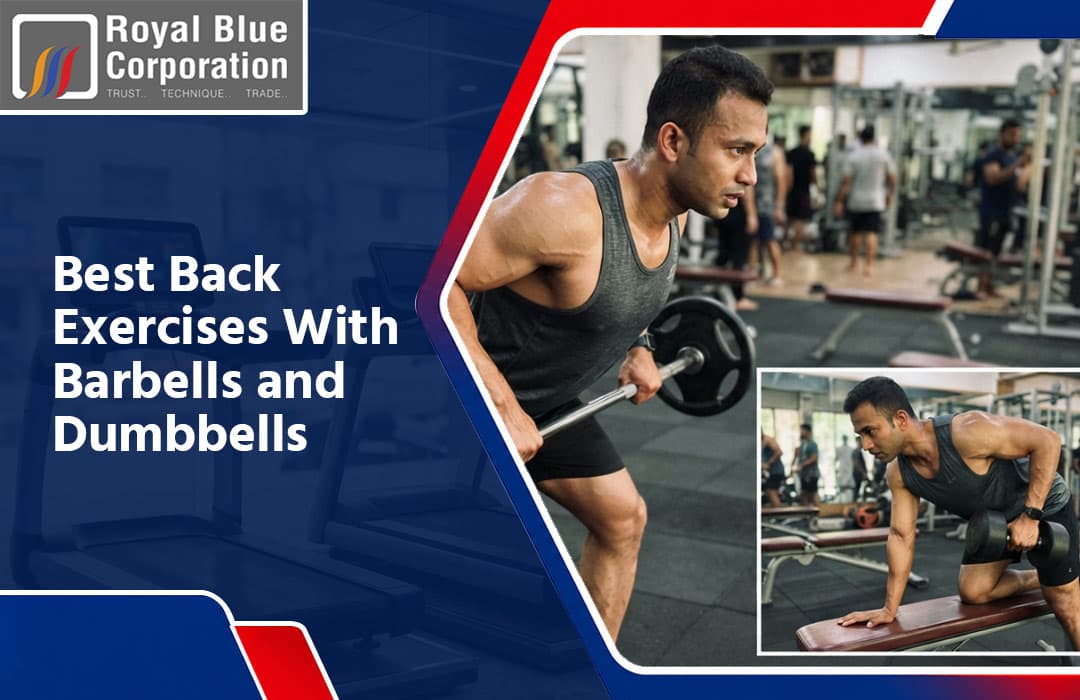
Best Back Exercises With Barbells and Dumbbells
Build a Stronger and Wider Back With Effective Barbell and Dumbbell Exercises
Best Back Exercises With Barbells and Dumbbells for a Stronger, Wider Back
A strong back is the foundation of almost every pulling movement your body performs — from picking up groceries to deadlifting a personal record. Yet back training is one of the most neglected parts of many home workout routines, mainly because people don't know which back exercises with barbells and dumbbells actually build real strength and width. In this guide, we'll break down the best barbell back exercises, the best dumbbell back workout movements, proper form, a sample weekly routine, and how to pick the right home gym equipment to train your back effectively from home.
Whether your goal is a bigger back, better posture, or simply reducing lower back pain from sitting all day, this guide covers everything you need — using nothing more than a barbell, a set of dumbbells, and a bit of consistency.
Why Back Training Deserves More Attention
Most lifters focus heavily on "mirror muscles" like the chest and biceps, but the back is arguably more important for long-term health and performance. Here's why:
- Posture correction — Strengthening the lats, rhomboids, and traps counteracts the forward-hunched posture caused by desk work and phone use.
- Injury prevention — A strong posterior chain (back, glutes, hamstrings) protects your spine during daily lifting and bending.
- Balanced physique — Back training builds the classic "V-taper" shape by widening the lats and thickening the mid-back.
- Improved pulling strength — Rows, deadlifts, and pull-based movements carry over to almost every sport and daily activity.
- Better performance in other lifts — A strong back stabilizes your bench press, squat, and overhead press.
If you already own a barbell and a pair of adjustable dumbbells at home, you have everything required to build a complete back — no cable machine or lat pulldown needed.
Barbell vs Dumbbell Back Exercises: What's the Difference?
Both tools are excellent, but they train the back slightly differently, and combining them gives the most complete development.
Barbell back exercises allow you to lift heavier total weight, which is ideal for building raw strength and overall muscle mass. Because both hands work together on a fixed bar, barbell rows and deadlifts are extremely efficient for loading the entire posterior chain at once.
Dumbbell back exercises, on the other hand, allow each side of your body to work independently. This unilateral training helps fix muscle imbalances, increases the range of motion, and activates stabilizer muscles that a barbell often bypasses. Dumbbell rows and pullovers are particularly effective for isolating the lats and improving the mind-muscle connection.
The takeaway: use barbells for heavy, compound strength work, and dumbbells for unilateral correction, extra range of motion, and finishing volume.
Top Barbell Back Exercises
1. Conventional Deadlift
The deadlift is often called the king of back exercises because it trains the entire posterior chain — lats, traps, spinal erectors, glutes, and hamstrings — in a single movement. Keep your spine neutral, hinge at the hips, and drive through your heels as you stand up with the bar close to your shins.
2. Barbell Bent-Over Row
This is the single best mass-builder for the mid-back and lats. Hinge forward at roughly 45 degrees, keep your core braced, and pull the barbell toward your lower ribcage while squeezing your shoulder blades together at the top.
3. Pendlay Row
A stricter, more explosive variation of the bent-over row, the Pendlay row starts from a dead stop on the floor each rep. This removes momentum and forces your back muscles to generate all the pulling power, making it excellent for building strength and thickness.
4. Rack Pull
Performed from knee height using a power rack, the rack pull allows you to overload the top portion of the deadlift. This is especially effective for developing the upper back and traps without over-fatiguing the lower back.
5. T-Bar Row (Landmine Row)
Using a barbell wedged into a corner or landmine attachment, the T-bar row lets you load heavy weight in a supported, chest-braced position, making it easier on the lower back while still building serious back thickness.
Top Dumbbell Back Exercises
1. Single-Arm Dumbbell Row
One of the most effective unilateral back exercises, the single-arm row lets you focus entirely on squeezing the lat and mid-back on each side, with a longer stretch at the bottom than a barbell row allows.
2. Dumbbell Deadlift (Romanian Deadlift)
A fantastic alternative when you don't want to load a barbell heavily, the dumbbell RDL trains the hamstrings, glutes, and spinal erectors while teaching proper hip-hinge mechanics.
3. Renegade Row
Combining a plank position with alternating rows, the renegade row challenges your core stability while training the lats and upper back — a great finisher for a home back-and-core circuit.
4. Dumbbell Pullover
An often-overlooked movement, the dumbbell pullover stretches and contracts the lats through a unique arc of motion, also engaging the chest and serratus muscles. It's excellent for improving shoulder mobility alongside back development.
5. Chest-Supported Dumbbell Row
Lying face-down on an incline bench removes momentum entirely, isolating the back muscles without any lower-back strain — ideal for lifters who want pure muscle tension without spinal loading.
Sample Weekly Back Workout (Barbell + Dumbbell Combo)
| Exercise | Sets | Reps | Rest |
|---|---|---|---|
| Conventional Deadlift (Barbell) | 3 | 5 | 2–3 min |
| Barbell Bent-Over Row | 4 | 8 | 90 sec |
| Single-Arm Dumbbell Row | 3 | 10 per side | 60 sec |
| Chest-Supported Dumbbell Row | 3 | 12 | 60 sec |
| Dumbbell Pullover | 3 | 12 | 45 sec |
Perform this routine once or twice per week, depending on your overall training split, allowing at least 48 hours of recovery before training back again.
Back Exercise Form Tips and Common Mistakes
- Don't round your lower back during rows or deadlifts — keep a neutral spine throughout the lift to avoid injury.
- Avoid using momentum to swing the weight up; controlled reps build far more muscle than jerky, half-rep movements.
- Squeeze at the top of every rowing movement for a full one-to-two-second contraction before lowering.
- Don't skip the stretch at the bottom of the movement — a full range of motion is essential for lat development.
- Warm up your grip and forearms since back exercises are highly grip-dependent; consider using wrist straps for heavier sets.
Choosing the Right Barbell and Dumbbell Set for Home Back Workouts
Building an effective home back workout starts with reliable equipment. A durable barbell with a comfortable knurling pattern is essential for deadlifts and rows, while a set of adjustable dumbbells gives you the flexibility to progress in weight as you get stronger without cluttering your space with multiple fixed pairs.
If you're setting up or upgrading your home gym, browse the full range of barbells, weight plates, and dumbbell sets available at royalblue.com.bd, Bangladesh's trusted destination for fitness and home gym equipment. Royal Blue also stocks power racks, adjustable benches, and other strength-training essentials that pair perfectly with the exercises covered in this guide, making it easy to build a complete home back-training setup in one place.
Frequently Asked Questions
How often should I train my back in a week? Most people see the best results training back once or twice per week, allowing enough recovery time between sessions for the muscles to repair and grow.
Is a barbell or dumbbell better for back thickness? Barbell rows and deadlifts are generally superior for overall mass and strength, while dumbbells are better for isolating each side and correcting imbalances. Using both together produces the best results.
Can I build a wide back without a lat pulldown machine? Yes. Deadlifts, barbell rows, single-arm dumbbell rows, and pullovers can build significant lat width and thickness without any cable machine.
What's the best beginner back exercise? The dumbbell row is one of the safest and most beginner-friendly options because it's easy to learn, low-risk on the lower back, and highly effective for building initial back strength.
Do I need heavy weights to grow my back muscles? Not necessarily. Controlled form, a full range of motion, and progressive overload over time matter more than lifting extremely heavy weight from day one.
Final Thoughts
Combining barbell and dumbbell back exercises gives you the best of both worlds: heavy compound strength from barbell lifts and precise, unilateral muscle-building from dumbbell movements. Stick to proper form, progressively increase your weights, and stay consistent with a structured routine like the one outlined above, and you'll build a stronger, more balanced back in a matter of months.
Ready to start? Explore high-quality barbells, dumbbells, and complete home gym packages at royalblue.com.bd and take the first step toward a stronger back today.