
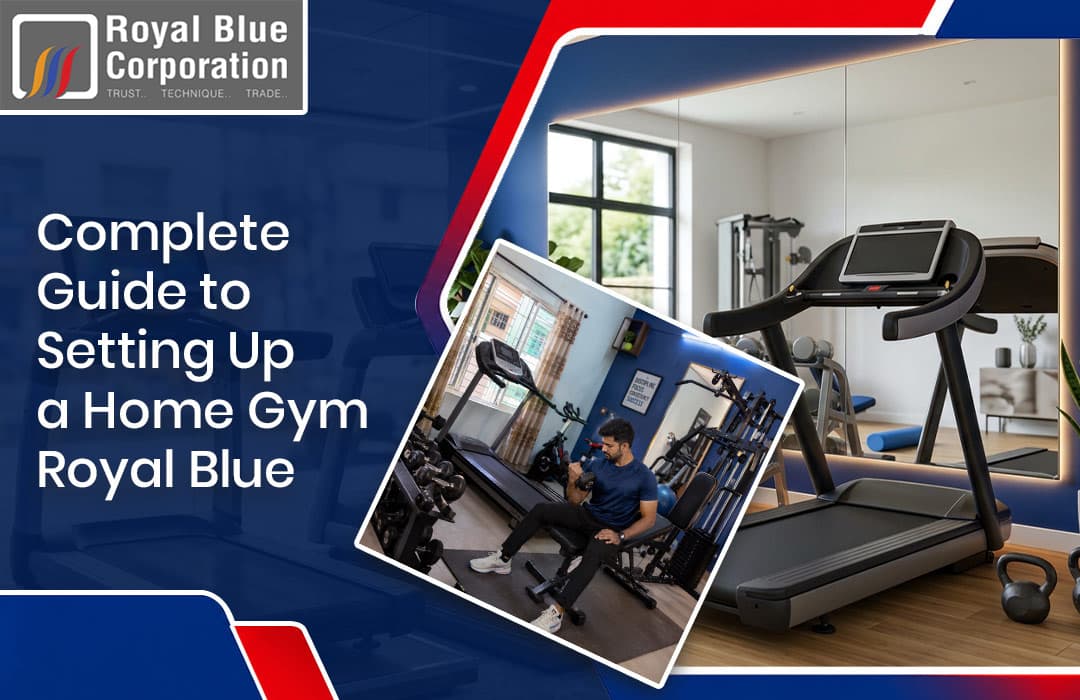
Complete Guide to Setting Up a Home Gym | Royal Blue
Step-by-Step Home Gym Setup, Equipment Guide & Budget-Friendly Fitness Solutions
Complete Guide to Setting Up a Home Gym | Royal Blue
There's a particular kind of freedom that comes with rolling out a mat in your own living room at 6 a.m., cranking up your favourite playlist, and getting a full workout in — no commute, no waiting for the squat rack, no monthly membership fee draining your account whether you show up or not.
That's the quiet promise of a home gym: fitness that bends around your life instead of the other way around. But turning a spare corner, a balcony, or an unused bedroom into a functional training space isn't just about buying equipment and hoping for the best. A home gym that actually gets used — day after day, month after month — is the result of a few deliberate decisions made early on: how much space you really have, what your body actually needs, and which pieces of equipment will earn their keep rather than gather dust under a pile of laundry.
This guide walks you through that entire process, step by step, so that whether you're working with a 40 square foot balcony in Dhaka or a full spare room, you end up with a setup that fits your goals, your budget, and your home.
Step 1: Define Your Fitness Goals Before You Define Your Space
It's tempting to start by browsing equipment, but the smarter starting point is a simple question: what do you actually want your body to be able to do six months from now?
- Weight loss and cardiovascular health point you toward cardio-first equipment — a treadmill, an exercise bike, or a cross trainer that you'll use most days of the week.
- Muscle building and strength shift the priority toward dumbbells, a sturdy bench, and functional gym equipment that lets you progressively add resistance.
- General mobility, stress relief and flexibility lean on floor space, a mat, and light accessories rather than heavy machinery.
- A mix of everything — which is what most people actually want — calls for a small, well-chosen combination of cardio and strength tools rather than one of each category maxed out.
Write your goal down in one sentence. It sounds unnecessary, but it becomes the filter for every purchase decision that follows, stopping you from buying a commercial-grade cross trainer when what you really needed was a yoga mat and a resistance band.
Step 2: Measure and Map Your Available Space
Home gyms fail more often because of poor space planning than poor equipment choices. Before spending a single taka, grab a measuring tape.
For a compact setup (30–60 sq ft): think foldable or walking-pad-style treadmills, resistance bands, adjustable dumbbells, and a mat. Anything that can lean against a wall or slide under a bed wins here.
For a medium setup (60–120 sq ft): you can comfortably fit a full-size treadmill or exercise bike alongside a bench and a dumbbell rack, with enough floor clearance to move safely between them.
For a dedicated room (120+ sq ft): this is where a genuine multi-station setup makes sense — a cross trainer, a bench, a rack of gym equipment, and open floor space for mobility work, all at once.
Ceiling height matters too, especially if you're considering equipment with an incline function or overhead movements. And don't forget ventilation — a home gym without airflow gets abandoned fast in Dhaka's humidity, so position your setup near a window or fan wherever possible.
Step 3: Choose Your Cardio Foundation
Cardio equipment tends to be the anchor of most home gyms simply because it gets used the most consistently. Three main options dominate this category, and each suits a different lifestyle.
Treadmills
- A treadmill remains the single most versatile piece of home cardio equipment because it accommodates every fitness level — from a slow recovery walk to sprint intervals. When choosing one, three specs matter more than anything else: motor power, running surface length, and folding mechanism.
AC motor treadmills are built for durability and near-continuous daily use, making them ideal if multiple family members will be training on the same machine or if your workouts run long. - DC motor treadmills are quieter and more compact, better suited to apartments or shared walls where noise is a genuine concern.
- Manual treadmills which rely on your own stride to move the belt, are a low-cost, low-maintenance entry point for walking-based cardio, though they aren't built for serious running.
Royal Blue's treadmill collection covers all three categories, and their breakdown by motor type — AC motor, DC motor, and manual — makes it easy to shortlist by how you'll actually train rather than by brand alone. If you want a starting point, browsing well-reviewed lines like bActive treadmills or Jogway treadmills gives you a sense of what mid-range durability looks like before you commit.
Exercise Bikes- For anyone with joint sensitivity, or simply anyone who prefers reading, watching a show, or catching up on calls while training, an exercise bike is the lower-impact alternative to running. Spin-style bikes suit higher-intensity interval work, while recumbent bikes are gentler and better for longer, steady sessions or rehabilitation. Royal Blue's exercise bike range spans both, so you can match resistance style to your knees rather than the other way around.
Cross Trainers
- A cross trainer, or elliptical, gives you a full-body cardio workout — arms and legs moving together — while keeping impact on the joints minimal. It's a strong middle-ground choice for households where more than one person will use the same equipment, since the motion is intuitive and low-risk regardless of fitness level. You'll find a solid selection in Royal Blue's cross trainer category.
Cross Trainers
- A cross trainer, or elliptical, gives you a full-body cardio workout — arms and legs moving together — while keeping impact on the joints minimal. It's a strong middle-ground choice for households where more than one person will use the same equipment, since the motion is intuitive and low-risk regardless of fitness level. You'll find a solid selection in Royal Blue's cross trainer category.
Step 4: Build Your Strength Training Setup
- Cardio burns calories in the moment; strength training changes what your body does with calories all day long. Even a modest strength setup pays off disproportionately.
Dumbbells
- If you only buy one piece of strength equipment, make it dumbbells. They're space-efficient, endlessly versatile — covering everything from bicep curls to squats to shoulder presses — and scale easily as you get stronger. Fixed-weight dumbbells are cheaper and simpler for beginners, while adjustable sets save space long-term since one pair replaces an entire rack. Royal Blue's dumbbell collection includes both, with rubber-coated hex options that protect your flooring from dents and dings during heavier lifts.
Benches
- A flat or adjustable bench unlocks a huge range of exercises that the floor alone can't offer — chest presses, step-ups, incline work, and supported rows. It's a compact addition that multiplies what your dumbbells can do. Browse options in Royal Blue's benches section.
Multi-Function Gym Equipment
- For those who want strength training to go beyond dumbbells without committing to a full commercial gym setup, multi-station home gym equipment combines several resistance exercises — like cable presses, lat pulldowns, and leg extensions — into a single compact frame. It's a bigger investment, but it consolidates what would otherwise be five or six separate machines. Royal Blue's gym equipment category is worth browsing if you're planning a dedicated training room rather than a corner setup.
Step 5: Get the Flooring Right
- This is the step people skip most often — and regret. Hard floors transmit vibration and noise to neighbours, get damaged by dropped weights, and offer poor grip during floor exercises. A proper gym floor mat solves all three problems at once: it cushions impact, muffles sound, protects tiles or wood underneath, and gives you secure footing whether you're doing burpees or holding a plank.
- Interlocking foam or rubber tiles are the most practical choice for home setups because you can size them to your exact space and pull them up easily if you move equipment around later. Royal Blue's floor mat range includes interlocking options sized for exactly this kind of flexible, do-it-yourself layout.
Step 6: Add Recovery and Mobility Tools
A home gym that only builds intensity without building recovery tends to lead to burnout or injury. Two categories round this out well.
Massagers — whether a simple foot and leg massager or a full massage chair — help manage the muscle soreness that comes with consistent training, especially in the first few months when your body is adapting to a new routine. Royal Blue's massager collection ranges from affordable handheld and foot units to more substantial recliner-style chairs for those who want serious post-workout recovery.
Yoga and mobility gear — mats, blocks, and stretch accessories — matter just as much as heavy equipment, particularly for anyone sitting at a desk most of the day. Ten to fifteen minutes of mobility work before or after a strength session noticeably reduces stiffness and injury risk over time. Royal Blue's yoga category covers the basics needed to build this habit.
- Step 7: Don't Forget the Right Gear
- Equipment gets most of the attention, but proper workout clothing plays a real role in comfort and performance — moisture-wicking fabric, supportive footwear and clothing that doesn't restrict movement all make a noticeable difference once you're training regularly. Royal Blue's sports clothing section and broader sports equipment range are worth a look if you're building out your kit alongside your equipment.
Step 8: Set a Realistic Budget and Prioritise
Very few people can — or should — buy everything at once. A practical approach is to build your home gym in three phases:
Phase one (essentials): a mat, a set of adjustable dumbbells, and one piece of cardio equipment suited to your space. This alone covers 80% of what most people need for the first few months.Phase two (expansion): a bench, resistance bands, and additional dumbbell weight as you get stronger and your routine becomes more specific.
Phase three (specialisation): multi-function gym equipment, a second cardio machine, or recovery tools like a massager, once you know exactly how and how often you train.
This phased approach avoids the common mistake of over-buying early, before you actually know your training habits, and it spreads the cost out in a way that's easier on the wallet. If you'd rather see everything in one place before deciding, Royal Blue's full shop page lets you compare categories and prices side by side.
- Step 9: Plan for Maintenance from Day One
- Equipment that isn't maintained doesn't last, and a treadmill belt or bike chain that starts squeaking is often the first excuse people use to stop training altogether. A few habits keep everything running smoothly:
Wipe down and dust equipment weekly, especially moving parts like treadmill belts and bike pedals. - Check and tighten bolts on benches and multi-station equipment every few months, since regular use naturally loosens fittings.
- Keep dumbbells and weight plates off bare flooring using a mat or rack to prevent both floor damage and rust from moisture.
- Lubricate treadmill belts periodically according to the manufacturer's guidance to prevent motor strain.
Buying from a supplier that offers genuine after-sales support makes this dramatically easier, since you're not troubleshooting alone when something needs adjusting
Step 10: Design for Consistency, Not Just Function
- The final, often-overlooked ingredient in a home gym that actually works is atmosphere. A space that feels cramped, dim, or like an afterthought quietly discourages you from showing up, even when the equipment itself is perfectly good. A few small touches make a disproportionate difference:
Good lighting, ideally natural light if your space allows it. - A mirror, even a modest one, to check form during strength work.
- A speaker or dedicated space for your phone, since music or podcasts make longer cardio sessions far more sustainable.
- Storage — a simple rack or shelf — so mats, bands, and dumbbells have a home instead of cluttering the floor.
- None of these cost much, but together they turn a room with equipment in it into an actual gym you look forward to using.
Bringing It All Together - Setting up a home gym isn't about recreating a commercial fitness centre in miniature — it's about building a space that matches exactly how you intend to train, in the space you actually have, at a pace your budget can sustain. Start with your goals, measure your space honestly, choose one solid piece of cardio equipment and a set of dumbbells to begin with, get your flooring right, and expand from there as your routine solidifies.
- Royal Blue Corporation has spent over a decade helping households across Bangladesh build exactly this kind of setup, from single-item purchases to complete room fit-outs, backed by warranty support and nationwide delivery. Whatever stage you're at — buying your very first mat or finally committing to a full home gym — their product categories and team are there to help you build a space you'll actually keep using.