
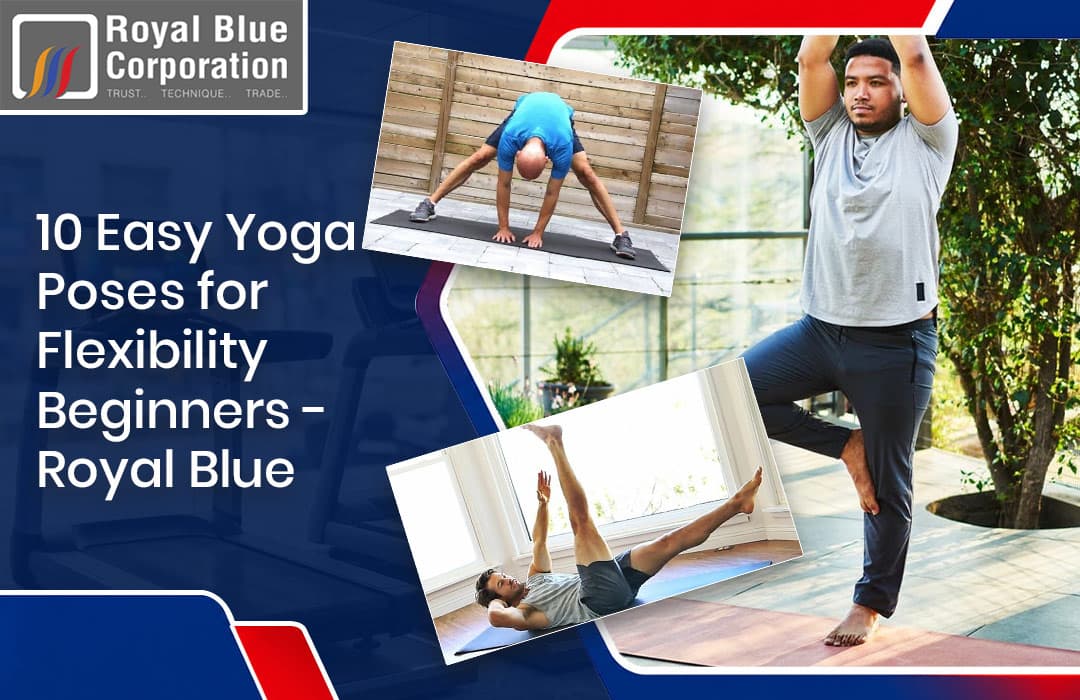
10 Easy Yoga Poses for Flexibility Beginners - Royal Blue
Simple Beginner-Friendly Yoga Poses to Improve Flexibility
10 Easy Yoga Poses for Flexibility Beginners Flexibility isn't something you're either born with or without — it's a skill, and like any skill, it responds to consistent, gentle practice. If you've ever watched someone fold effortlessly into a forward bend or twist comfortably into a seated stretch and thought "I could never do that," the truth is far more encouraging: almost anyone can build that range of motion, starting from wherever their body is today. Yoga happens to be one of the gentlest, most accessible ways to get there. Unlike high-intensity training, flexibility-focused yoga doesn't punish you for being a beginner. There's no weight to lift, no pace to keep up with, no equipment you're missing. All it asks for is a few square feet of floor, a comfortable mat, and a willingness to hold still for a breath longer than feels natural. This guide walks through ten beginner-friendly poses that, practiced regularly, loosen tight hips, lengthen a stiff spine, open cramped shoulders, and gradually restore the kind of ease of movement most of us lose somewhere between long work hours and sedentary routines. Each pose includes how to get into it safely, what it does for your body, and a small cue to help you get more out of it. Before diving into the poses themselves, it's worth understanding why flexibility work matters as much as strength or cardio. Tight muscles restrict how far a joint can comfortably move, and over time that restriction shows up as stiffness, lower back discomfort, poor posture, and a higher risk of strain during everyday movements — bending to pick something up, reaching overhead, or simply standing up from a low chair. Flexibility training reverses that pattern gradually, lengthening muscle fibers and improving the signal between your brain and your muscles about how far they can safely stretch. It also does something less obvious: it slows you down. In a culture of rushed mornings and constant multitasking, holding a single stretch for thirty seconds and simply breathing through it is often the closest thing to genuine rest many people get in a day. The appeal of beginner yoga is how little it requires. A few basics make the practice noticeably more comfortable, though: A non-slip yoga mat to cushion your joints and keep your hands and feet from sliding, especially important on tile or hardwood floors. Comfortable, breathable clothing that doesn't restrict movement at the hips, shoulders, or waist. A quiet corner with enough clearance to stretch your arms and legs fully in every direction. Royal Blue's yoga category has mats and accessories built specifically for this kind of practice, and if you're setting up a dedicated stretching corner at home, their floor mat range offers interlocking tiles that give you a cushioned, non-slip surface sized to your exact space. For clothing that won't fight you mid-stretch, Royal Blue's sports clothing collection is worth a look too. With that sorted, here are ten poses that form a genuinely beginner-friendly foundation. 1. Child's Pose (Balasana) Start kneeling on your mat, big toes touching, knees spread comfortably wide. Sit your hips back toward your heels and fold forward, resting your forehead on the mat and stretching your arms out in front of you, palms down. What it does: Gently stretches the lower back, hips, and thighs while calming the nervous system. It's often used as a resting pose between more active stretches. Beginner cue: If your hips don't reach your heels comfortably, place a folded towel or cushion between your hips and heels for support. Come onto your hands and knees, wrists under shoulders, knees under hips. Inhale, drop your belly, lift your chest and tailbone (Cow); exhale, round your spine toward the ceiling, tucking your chin (Cat). Move slowly between the two, syncing each shift with your breath. What it does: Mobilises the entire spine, releases tension along the back, and warms up the torso for deeper stretches ahead. It's one of the safest ways to introduce spinal movement to a stiff back. Beginner cue: Keep the movement slow and controlled — this is about mobility, not speed. From hands and knees, tuck your toes and lift your hips up and back, forming an inverted V-shape. Keep your hands shoulder-width apart, feet hip-width apart, and let your heels reach gently toward the floor without forcing them down. What it does: Stretches the hamstrings, calves, shoulders, and spine simultaneously, while also building light strength in the arms and shoulders. Beginner cue: Bend your knees generously if your hamstrings are tight — a slight bend keeps your spine long, which matters more than straight legs. Stand with feet hip-width apart, hinge forward from the hips, and let your upper body fold down over your legs. Let your arms hang or hold opposite elbows, and allow your head and neck to relax completely. What it does: Deeply stretches the hamstrings and lower back, and the inverted position gently encourages relaxation by shifting blood flow toward the upper body. Beginner cue: Keep a soft bend in the knees, especially if your hamstrings are tight or you feel any strain in the lower back. From standing, step one foot back into a lunge, lowering the back knee to the mat. Keep the front knee stacked over the front ankle, and either rest your hands on the front thigh or raise them overhead for a deeper stretch. What it does: Opens the hip flexors, which tend to tighten significantly from long hours of sitting, and stretches the front of the back thigh. Beginner cue: Place a folded towel under the back knee if kneeling on a hard floor feels uncomfortable — Royal Blue's floor mat range provides extra cushioning that makes kneeling poses noticeably easier on the joints. Sit with your legs extended straight in front of you. Inhale to lengthen your spine, then exhale and hinge forward from the hips, reaching toward your feet, shins, or wherever feels accessible today. What it does: Stretches the entire back body — hamstrings, calves, and spine — in one continuous line, and is one of the clearest ways to track flexibility progress over time. Beginner cue: Don't judge the pose by how far your hands reach. A slight forward lean with a straight spine is more valuable than a deep fold with a rounded back. Sit with the soles of your feet pressed together, knees falling open to the sides. Hold your feet or ankles, and gently press your knees toward the floor without forcing them, staying upright or folding slightly forward. What it does: Opens the hips and inner thighs — an area that stays chronically tight for most people who sit for long stretches of the day. Beginner cue: Sit on a folded towel or cushion if your hips are tight; it tilts the pelvis forward and makes the stretch far more comfortable. Lie face down, palms flat under your shoulders. Press gently into your hands and lift your chest off the mat, keeping your elbows slightly bent and your hips grounded. What it does: Opens the chest and shoulders while gently stretching the front of the spine — a useful counter-stretch after a day spent hunched over a desk or phone. Beginner cue: Lift only as high as feels comfortable; the goal is a gentle backbend, not maximum height. Lie on your back, draw one knee toward your chest, then guide it across your body toward the floor while keeping both shoulders grounded. Extend the opposite arm out to the side and turn your head gently away from the bent knee. What it does: Releases tension along the spine and lower back while gently stretching the outer hips and glutes — a favourite wind-down pose for tight lower backs. Beginner cue: Let the knee rest wherever it naturally lands rather than forcing it flat to the floor; the twist works even at a shallow angle. Sit sideways next to a wall, then swing your legs up the wall as you lower your back to the floor, arms resting comfortably by your sides. Stay here for several minutes, breathing slowly. What it does: Though it barely looks like a stretch, this pose gently releases tension in the hamstrings and lower back while calming the nervous system — an ideal closing pose for any flexibility routine. Beginner cue: Keep a cushion under your hips if the position feels too intense on the lower back at first. Building a Simple Routine Around These Poses You don't need to do all ten poses every day to see progress. A realistic beginner routine might look like this: Warm-up (2 minutes): Cat-Cow to mobilise the spine. Standing stretches (5 minutes): Downward-Facing Dog, Standing Forward Bend, Low Lunge on each side. Seated stretches (5 minutes): Seated Forward Bend, Butterfly Pose. Backbend and twist (4 minutes): Cobra Pose, Reclining Spinal Twist on each side. Cool-down (4 minutes): Child's Pose, then Legs-Up-The-Wall. That's roughly 20 minutes, done three to four times a week, which is more than enough to notice a real difference in how your body moves within a month. A few habits quietly slow down progress or lead to unnecessary discomfort: Forcing the stretch. Flexibility improves through consistency, not intensity. Pushing into pain rather than a comfortable stretch sensation actually causes muscles to tighten defensively, working against you. Holding your breath. Breath is what allows muscles to relax into a stretch. Holding a pose while breathing shallowly keeps the nervous system on alert, limiting how deep the stretch can go. Skipping warm-up movements. Jumping straight into deep stretches on cold muscles increases strain risk. A brief warm-up like Cat-Cow prepares the body properly. Comparing your flexibility to someone else's. Every body has a different starting point, shaped by years of different habits, injuries, and activity levels. Progress is personal, and it's rarely linear. Practicing on a hard, slippery surface. An unstable surface makes every pose harder to hold safely, especially standing and balancing stretches. A proper mat, like those in Royal Blue's yoga collection, removes this problem entirely and lets you focus on the stretch itself rather than staying upright. Most beginners notice looser hips and an easier forward fold within two to three weeks of consistent practice, three to four sessions a week. Deeper structural changes — the kind that let you comfortably touch your toes or sit cross-legged without strain — typically build over two to three months. The key variable isn't intensity; it's consistency. A gentle twenty-minute session done four times a week outperforms an intense hour done once and then abandoned. Flexibility work pairs naturally with the rest of a well-rounded fitness routine rather than replacing it. If you're also working on cardio or strength at home, a short yoga session before a workout warms up the joints and muscles, while a session afterward helps with recovery and reduces next-day stiffness. For those building out a broader home fitness setup — from a treadmill for cardio to dumbbells for strength — Royal Blue's home exercises category and full gym equipment range make it easy to add these pieces gradually as your routine develops. Flexibility is one of the most forgiving areas of fitness to start improving — there's no risk of "lifting too heavy," no complicated form to master overnight, and genuine progress with just a mat and twenty minutes a few times a week. These ten poses cover the major areas that tend to get tight from modern, sedentary living: hips, hamstrings, shoulders, and spine. Practiced consistently, they don't just make you more flexible — they make everyday movement, from bending down to reaching overhead, noticeably easier and more comfortable. Royal Blue Corporation offers a full range of yoga mats, floor tiles, and home fitness accessories to help you build this practice comfortably at home. Whether you're starting with nothing but a mat or building out a complete home workout space, explore their shop to find everything you need to begin, and keep showing up on the mat — a little more flexibility, one breath at a time.Why Flexibility Deserves a Place in Your Routine
Getting Ready: What You Actually Need
2. Cat-Cow Stretch (Marjaryasana-Bitilasana)
3. Downward-Facing Dog (Adho Mukha Svanasana)
4. Standing Forward Bend (Uttanasana)
5. Low Lunge (Anjaneyasana)
6. Seated Forward Bend (Paschimottanasana)
7. Butterfly Pose (Baddha Konasana)
8. Cobra Pose (Bhujangasana)
9. Reclining Spinal Twist (Supta Matsyendrasana)
10. Legs-Up-The-Wall (Viparita Karani)
Common Mistakes Beginners Make
How Long Until You Notice a Difference?
Combining Yoga With the Rest of Your Fitness Routine
Final Thoughts